
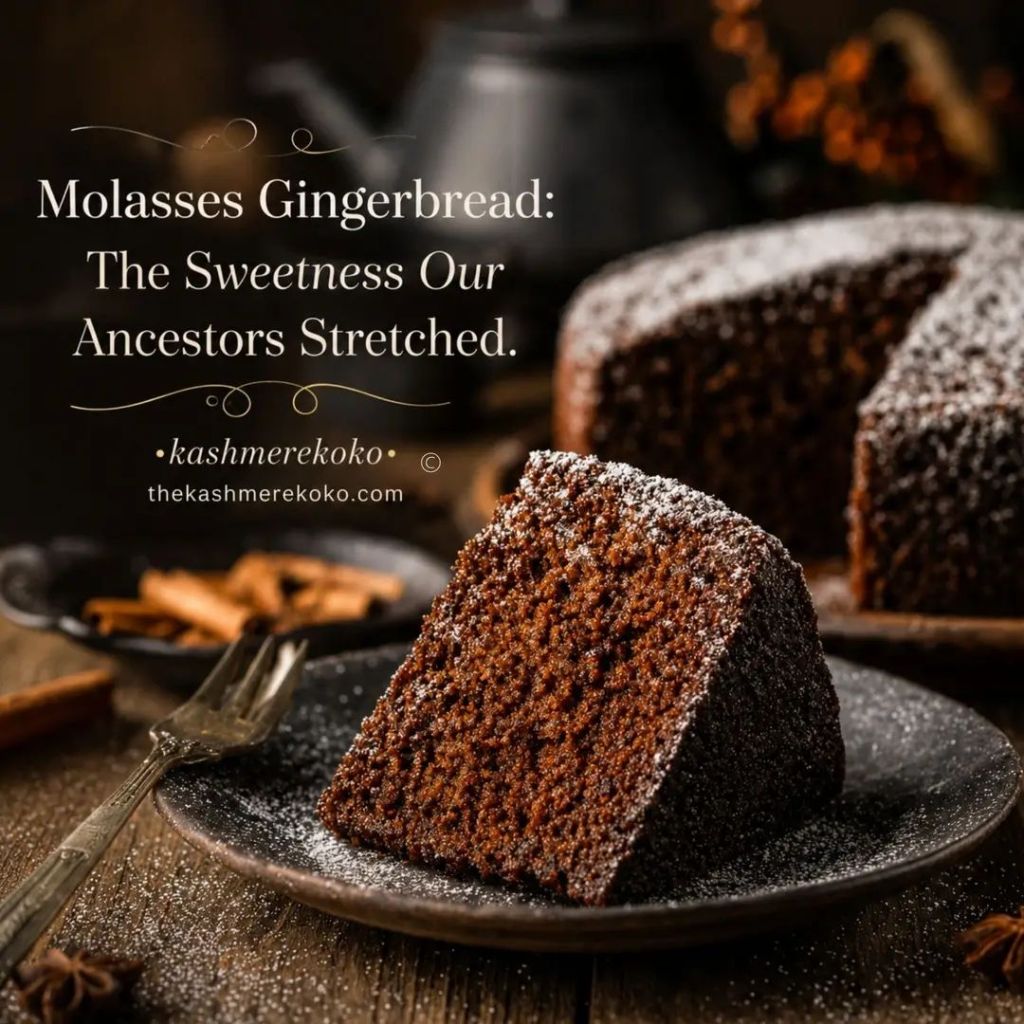
Molasses gingerbread and ginger cakes carry a deep history in Black foodways. During slavery and the years after, refined white sugar was often expensive and out of reach for poor and enslaved communities. Molasses, a dark byproduct of sugar production, was cheaper, easier to stretch, and sometimes appeared in rations, making it one of the main sweeteners used in humble kitchens.
Ginger cakes and molasses cakes were simple, dark, spiced sweets made with what people had available: flour or meal, molasses, fat, ginger, and sometimes cinnamon, nutmeg, or cloves. They did not require fancy white sugar, expensive ingredients, or elaborate baking tools. The flavor was bold, warm, and comforting, with molasses giving the cakes their deep brown color and rich bittersweet taste.
For enslaved cooks, food was never just food. It was survival, memory, creativity, and care. Even with limited rations, Black cooks found ways to create flavor, stretch ingredients, and bring small moments of comfort to families living under brutal conditions.
Molasses gingerbread also connects to early American baking traditions. Historic gingerbread cakes were common in the 18th century, often made as soft cookies or cake-like spiced sweets. Colonial Williamsburg’s historic foodways program describes gingerbread cakes as a cross between a ginger snap and a soft cookie, showing how long these spiced molasses-based treats have been part of American kitchens.
Why it became forgotten:
Over time, desserts made from survival ingredients were often pushed aside for richer cakes, pies, and bakery-style sweets. Molasses gingerbread became associated with poverty, old-fashioned cooking, and hard times, even though it carried history, skill, and ancestral wisdom. What was once a simple sweet made from necessity deserves to be remembered as part of Black culinary history.
Molasses gingerbread was more than a dessert. It was proof that our ancestors could take what little they were given and still create something warm, spiced, filling, and full of soul.


You must be logged in to post a comment.